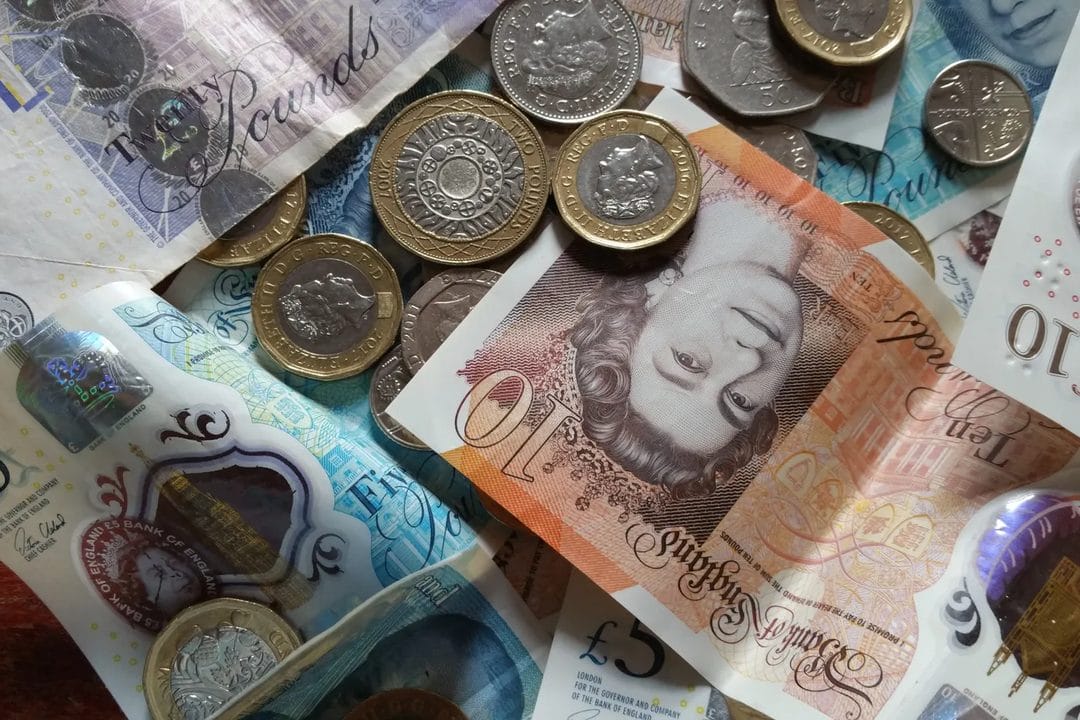
Ask ten people why they hold Premium Bonds and at least eight will say some version of "because you can't lose the money." That's technically true — NS&I is backed by the Treasury, and your £1,000 stake is still £1,000 next year regardless of what happens in the prize draw. What most holders don't sit down and calculate is what that £1,000 could have become somewhere else, and what it's quietly losing to inflation while it waits for a prize that, statistically, most months doesn't arrive.
NS&I cut the Premium Bonds annual prize rate to 3.6% in mid-2026, down from the 4%+ rates seen in 2023 and 2024 when the Bank Rate was higher. That headline number is an average, not a guarantee — it describes the total pool of prize money divided across all bonds, not what a typical holder actually receives. The median return, the one that describes what most people actually experience rather than the lucky few who land a £5,000 or £1 million prize, sits well below the advertised rate. For someone holding £5,000 in bonds, NS&I's own odds calculator puts the expected number of prizes at roughly 1.5 to 2 per year, almost all of them at the £25 minimum.
What Premium Bonds are actually good for
Premium Bonds make sense as an emergency fund or as parking space for money you'll need within 12 months — a house deposit due next spring, a tax bill in January, savings for a car you're buying in six months. The capital is instantly accessible (withdrawals typically clear within a few working days), it's 100% capital-protected, and any prizes you do win are entirely tax-free, which matters if you're a higher-rate taxpayer who's already used up your Personal Savings Allowance elsewhere.
Where Premium Bonds stop making sense is as a long-term wealth-building tool. Money held for five, ten or twenty years needs to actually grow in real terms, and a product whose expected return for most holders sits somewhere around 3-3.5% a year — below current inflation for large stretches of the past few years — is quietly losing purchasing power even while the nominal balance never falls. That's the trap: nothing on the statement ever goes red, so the erosion feels invisible in a way that a genuine stock market dip never does.
What a Stocks and Shares ISA actually offers instead
A Stocks and Shares ISA wraps your investments — funds, individual shares, investment trusts, whatever you choose — in a tax-free shelter, with the same £20,000 annual allowance for the 2026/27 tax year shared across all your ISA types. Unlike Premium Bonds, there's genuine risk here: a global tracker fund can and will fall 15-20% in a bad year, and anyone opening one expecting Premium-Bonds-style stability is going to have an unpleasant surprise the first time markets correct.
But over longer periods, the numbers tell a different story. The FTSE All-Share has returned an average of roughly 5-7% annually including dividends over rolling 10-year periods since the 1980s, and a globally diversified tracker such as Vanguard's FTSE Global All Cap or a Fidelity Index World fund — both charging under 0.25% a year in ongoing fees — has typically done better still, benefiting from decades of US equity growth. None of that is guaranteed for the next decade specifically, and anyone telling you it is hasn't understood the product. What is reasonably well established is that over any 15-year-plus horizon, a diversified equity ISA has beaten cash savings in the overwhelming majority of historical periods in the UK.
The trade-off in plain terms
- Premium Bonds: capital guaranteed, tax-free prizes, but expected real return for most holders is low and currently trailing inflation for anyone without exceptional luck
- Stocks and Shares ISA: capital at risk and will fluctuate, sometimes sharply, but historically the only mainstream option that has reliably outpaced inflation over long periods
- Neither is "better" in isolation — the honest answer depends entirely on when you need the money back, a question most comparison articles skip past
The time horizon question decides almost everything
If you need the money within three years, put it in Premium Bonds, a Cash ISA, or a fixed-rate savings account — not the stock market. There's no version of "but the returns are better" that survives being forced to sell equities during a downturn because you need the cash for a deposit next spring. Sequence-of-returns risk is real: a portfolio that would have averaged 7% a year over a decade can still leave you badly out of pocket if the one bad year happens to land right before you need to withdraw.
For money you genuinely won't need for ten years or more — a pension top-up, a child's future house deposit, retirement savings outside a workplace pension — a Stocks and Shares ISA is the better choice, full stop. Ten years is roughly the point at which historical UK and global equity data shows the probability of losing money in real terms drops sharply, though it's never zero. Anyone telling you equities are "safe" over any horizon is overselling the product; anyone telling you Premium Bonds are a serious long-term growth vehicle is underselling the alternative.
The middle ground — three to ten years — is genuinely the hardest call, and this is where a lot of financial advice gets vague on purpose because there isn't a clean answer. A common approach among UK investors in this position is splitting the money: Premium Bonds or a fixed-rate cash ISA for the portion you'd be upset to lose, and a more conservative multi-asset fund (something like a Vanguard LifeStrategy 60% equity fund rather than a 100% equity tracker) for the portion where a few years' extra growth potential is worth accepting some volatility.
Don't ignore the behavioural side
Here's the part most comparison calculators leave out entirely: which one will you actually stick with? Premium Bonds require zero decisions once bought — no rebalancing, no watching a chart, no temptation to sell during a scary headline. A Stocks and Shares ISA, particularly one held through a volatile year, tests your nerve in a way spreadsheets don't capture. If checking your portfolio during a 15% drawdown genuinely keeps you up at night to the point where you'd panic-sell near the bottom, the theoretically superior long-term return of an ISA is worthless to you in practice — you'll lock in the loss at exactly the wrong moment.
That's not a reason to avoid ISAs altogether. It's a reason to invest an amount, and in a way, you can actually leave alone for the full horizon — a globally diversified low-cost tracker fund held through a platform like Vanguard, AJ Bell or Hargreaves Lansdown, set up with a monthly direct debit and then genuinely not checked more than once a quarter.
A realistic worked example
Say you have £10,000 sitting in Premium Bonds today with no near-term need for it. At the current 3.6% average prize rate, and assuming you get something close to that average over ten years (unlikely for any individual holder, but useful as a benchmark), that £10,000 would be worth roughly £14,200 in nominal terms after a decade — before accounting for inflation eating into what that money actually buys.
The same £10,000 in a Stocks and Shares ISA tracking global equities at a historically reasonable 6% average annual return, inside the tax-free wrapper so there's no capital gains or dividend tax to account for, would grow to roughly £17,900 over the same ten years — assuming, and this is the important caveat, that you don't panic and sell during one of the two or three double-digit drawdowns that are near-certain to happen somewhere in that decade. That £3,700 gap is the real cost of choosing certainty over growth for money you didn't actually need to keep certain.
Neither number is a promise. Markets can and do produce worse decades than the historical average, and Premium Bonds prize rates can rise again if the Bank Rate climbs. But the underlying logic doesn't change: money you won't touch for a decade or more is generally better off exposed to growth assets inside an ISA wrapper, and money you might need next year has no business anywhere near the stock market regardless of the potential upside.
The withdrawal flexibility difference is bigger than people assume
Premium Bonds withdrawals are processed within a few working days and land back in your linked bank account with no penalty and no tax consideration whatsoever — genuinely one of the most liquid savings products available in the UK. A Stocks and Shares ISA is technically just as accessible; there's no lock-in period and no penalty for selling investments and withdrawing cash. The difference is timing risk rather than access risk: selling a Premium Bond never involves selling at a "bad" moment, because the value never moves, whereas selling ISA holdings to cover an unexpected bill means accepting whatever the market happens to be doing that particular week, which could easily be a 10% dip you'd rather not have crystallised.
This is why financial advisers generally recommend keeping three to six months of essential expenses in something cash-like — Premium Bonds, an easy-access savings account, or a Cash ISA — entirely separate from any money invested in a Stocks and Shares ISA. That buffer means an unexpected boiler replacement or a period without work doesn't force you to sell equities at whatever price happens to be on offer that day, which is precisely the scenario that turns a sound long-term investment strategy into a realised loss.
Fees quietly change the comparison too
Premium Bonds carry no fees of any kind — NS&I doesn't charge for holding or managing them, which is part of their appeal for people who dislike the idea of paying an ongoing percentage regardless of performance. A Stocks and Shares ISA, by contrast, usually involves at least two layers of cost: the platform fee charged by the broker (typically 0.15%-0.45% a year depending on the provider — Vanguard, AJ Bell, Hargreaves Lansdown and Interactive Investor all price this differently) and the fund's own ongoing charges figure, often 0.05%-0.25% a year for a passive tracker, higher for actively managed funds.
On a £10,000 portfolio, total annual fees of even 0.5% amount to £50 a year — not enough to change the underlying decision, but worth checking before assuming an ISA is automatically the cheaper option in every sense. Platform fees compound the same way returns do, and a portfolio held for twenty years on a 0.45% platform will end up meaningfully smaller than the identical portfolio held on a 0.15% platform, purely from the fee drag, independent of investment performance.